Roasted Potatoes Without Oil (Crispy, Healthy & Easy)
There is a particular disappointment in pulling roasted potatoes from the oven and finding them pale and soft. They smelled promising, but somewhere along the way they steamed instead of roasted. If you have always assumed crisp edges require a generous pour of oil, I understand — I assumed the same for years.
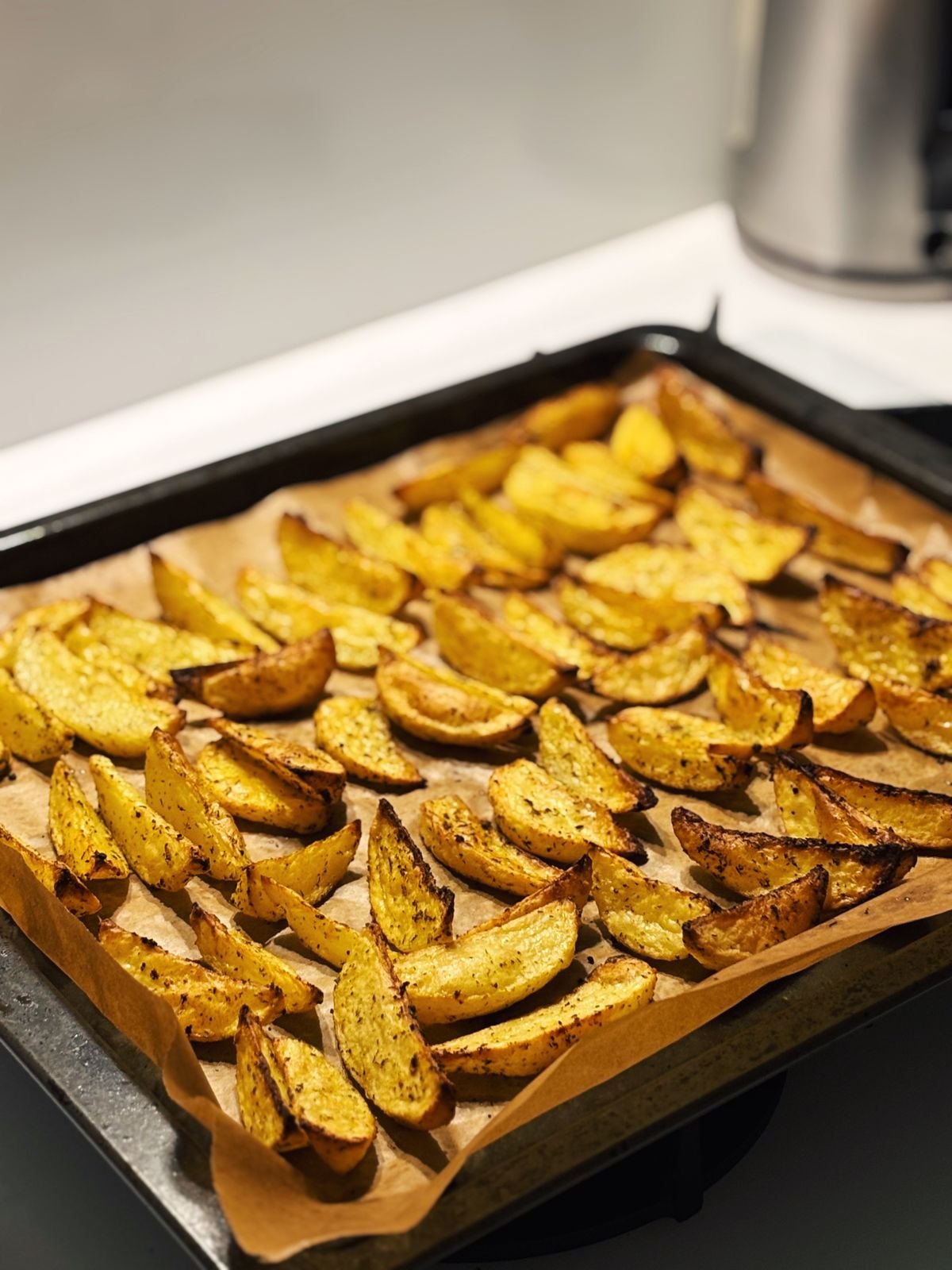
These roasted potatoes without oil changed my mind, and not in a “good enough for a diet” way. They come out genuinely crisp outside, with rough, golden edges that crackle a little when you bite in, and soft, fluffy centers that taste like a baked potato in miniature. The secret is not a fancy substitute. It is technique: a quick soak, a brief parboil that roughs up the surfaces, a thorough dry, a very hot pan, and enough space for hot air to work. Do those few things well, and the potatoes crisp beautifully on their own.
This recipe is for anyone cooking oil-free for health reasons, watching calories, or eating whole-food, plant-based — and for skeptics. Make one tray exactly as written and taste the crispiest piece first. That piece usually settles the argument.
You need no special equipment — just a hot oven, a sturdy baking sheet, parchment paper, and about an hour, most of it hands-off. The result goes with almost everything, costs very little, and disappears fast.
Why You’ll Love This Recipe
- Truly crispy, no oil needed: No olive oil, butter, or cooking spray — the crisp comes from starch, dry heat, and a hot pan.
- Budget-friendly and simple: Potatoes, salt, and everyday spices are all it takes.
- Fluffy inside, crunchy outside: Parboiling cooks the centers before the edges crisp, giving you that perfect contrast.
- Easy to season your way: Garlic-herb is the classic, but smoky, spicy, and lemony versions all work.
- Great for meal prep: Leftovers reheat well and work in breakfast hashes, bowls, and salads.
- Naturally vegan and gluten-free: As written, it suits a lot of tables without tweaking.
Ingredients
Makes about 4 servings as a side dish. Keep the seasoning roughly in proportion the first time so you can taste the baseline.
- 2 1/2 pounds (about 1.1 kg) Yukon Gold or Russet potatoes — about 6 medium, scrubbed well; peeling optional
- 1 teaspoon baking soda — for the parboiling water only; the quiet hero of this recipe
- About 1 tablespoon fine sea salt, divided — part for the boiling water, part for seasoning
- 1 teaspoon garlic powder — powder clings better than fresh garlic and will not burn
- 1 teaspoon smoked or sweet paprika — for color and gentle warmth
- 1/2 teaspoon onion powder
- 1/2 teaspoon dried oregano, thyme, or Italian seasoning
- 1/2 teaspoon freshly ground black pepper
- 1 tablespoon cornstarch or arrowroot powder (optional but recommended) — helps the edges dry and crisp
- 2 tablespoons aquafaba or low-sodium vegetable broth (optional) — only if needed to help seasoning stick
- 1 tablespoon fresh parsley, finely chopped, or sliced green onions — for serving
- Flaky sea salt, for finishing (optional but lovely)
Notes on Key Ingredients
The potatoes matter most. Yukon Golds are my first choice: thin skin, naturally creamy, almost buttery flesh, and they hold their shape while crisping well. Russets are the other excellent option — higher in starch, so fluffier centers and rougher, crunchier edges, though they can break apart if overcooked in the water. Red potatoes work in a pinch, but their waxy flesh stays smooth and firm, so they never get quite as crisp or fluffy.
Why baking soda in the water? This makes the whole recipe work. Baking soda makes the water slightly alkaline, breaking down the potato surface faster than salted water alone. The edges soften, and when you drain and shake the potatoes, that surface becomes a rough, starchy coating. In the oven it dries and crisps into the craggy crust you want. You taste none of it in the finished dish.
About the cornstarch. A light dusting tossed with the hot, drained potatoes absorbs surface moisture and adds a thin, dry layer that browns beautifully. Arrowroot works the same way. Skip it and they will still crisp, but the cornstarch version is noticeably crunchier.
Seasoning without oil needs timing. Oil normally acts as glue for spices. Without it, we season while the potatoes are hot and faintly damp from steam, so the spices cling. If your drained potatoes look bone-dry, toss them with the aquafaba or broth first — a tablespoon or two, no more. You want them barely moist, never wet.
Equipment
- Large pot with a lid, for parboiling
- Colander
- Large rimmed baking sheet (a half-sheet pan is ideal)
- Parchment paper or a silicone baking mat
- Sharp knife and cutting board
- Large bowl, or the same pot dried, for tossing
- Thin metal spatula, for flipping
Use the biggest sheet you own — crowding is the enemy of crisp potatoes. If they do not fit in one layer, use two pans.
Step-by-Step Instructions
1. Heat the oven and the pan
Place a rack in the center of the oven and preheat to 425°F (220°C). Line the baking sheet with parchment, then put the lined pan in the oven as it heats. Starting potatoes on a hot pan gives them an immediate sizzle underneath — the closest thing to a head start crispiness can get.
2. Cut the potatoes evenly
Scrub the potatoes and pat them dry. Peel if you like — Russets are often better peeled, while thin Yukon Gold skins roast up pleasantly, so I leave those on. Cut each potato into roughly 1-inch (2.5 cm) chunks: halve lengthwise, cut into thick strips, then across into cubes. Similar size matters more than perfect shape: even pieces cook at the same rate. Smaller pieces are crisper, larger ones fluffier; one inch is the happy middle.
3. Give them a quick soak
Cover the cut potatoes with cold water and soak at least 20 minutes, or up to 2 hours. This pulls off surface starch, helping them crisp instead of turning gummy. Short on time? A thorough rinse is better than nothing, but the soak is worth it. Drain and rinse once more.
4. Parboil until the edges soften
Bring a large pot of water to a rolling boil. Add the baking soda and about 2 teaspoons of salt. Add the potatoes, bring back to a lively simmer, and cook 7 to 9 minutes, until a knife slides in with slight resistance and the outsides look soft and slightly fuzzy. Yukon Golds need the full time; smaller Russet chunks may be ready at 7 minutes. You want them parcooked, not soft, because they still have a long roast ahead.
5. Drain, steam-dry, and rough them up
Drain in a colander and let the potatoes sit, steaming, for 2 full minutes. This pause matters: surface water is the enemy of crispness, and those minutes let a lot evaporate. Return them to the dry pot, cover, and give two or three firm shakes. The pieces should look scruffy, coated in a pale, starchy layer — that coating is your future crust. If edges still look smooth, shake once more, gently.
6. Season while they are hot
Sprinkle the cornstarch over the hot potatoes, if using, and toss gently. If the potatoes look very dry, drizzle on 1 to 2 tablespoons aquafaba or broth and toss once. Add the garlic powder, paprika, onion powder, dried herbs, black pepper, and 1/4 teaspoon salt. Toss until every piece looks evenly dusted. Work reasonably quickly — you want the potatoes still hot when they hit the hot pan.
7. Spread on the hot pan, in one layer
Carefully pull the hot sheet from the oven. Tip the potatoes onto the parchment in a single layer, spreading them so pieces are barely touching, if at all, and a cut side faces down on as many as possible. Flat side down means maximum contact with the hot pan, and maximum contact means maximum browning. If the pan looks crowded, divide between two pans. People rush this step most often, and it makes the biggest difference of all.
8. Roast, undisturbed at first
Roast 20 minutes without opening the oven or moving the potatoes. This quiet stretch lets a crust set on the undersides. Stir too early and the fragile crust tears away and sticks to the parchment instead of the potato. After 20 minutes, the bottoms should be deeply golden and release easily. If a piece resists when nudged, give it 2 or 3 more minutes — it will let go when ready.
9. Flip and finish roasting
Flip each piece with a thin metal spatula so a fresh side faces down. Roast another 15 to 20 minutes, until golden brown all over with darker, crisp edges, and the crust sounds dry and rustly when you gently shake the pan. Total roasting time is usually 35 to 40 minutes. Watch closely at the end: without oil, potatoes can go from deeply golden to too dark quickly, especially the smallest pieces.
10. Check for doneness, season, and serve
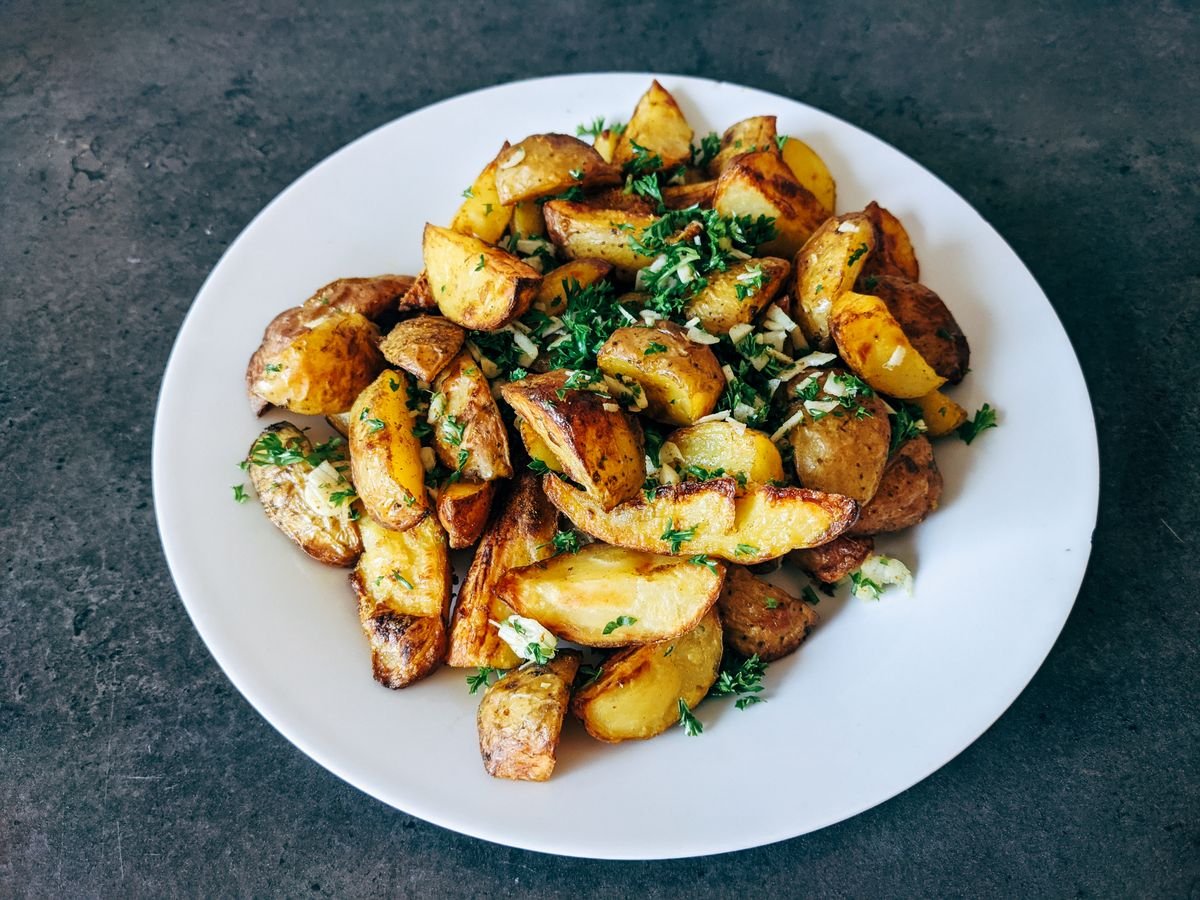
They are done when the crust is crisp and deeply golden, a knife slides into the largest piece with no resistance, and the interior looks soft and fluffy — almost steamy when you break one open. Taste one carefully and add more salt if needed. Salt at the end has an outsized impact, and a shower of flaky salt is especially good here. Scatter over parsley or green onions and serve immediately. Crisp potatoes wait for no one; they are best in the first 10 minutes.
How Oil-Free Potatoes Get Crispy, Really
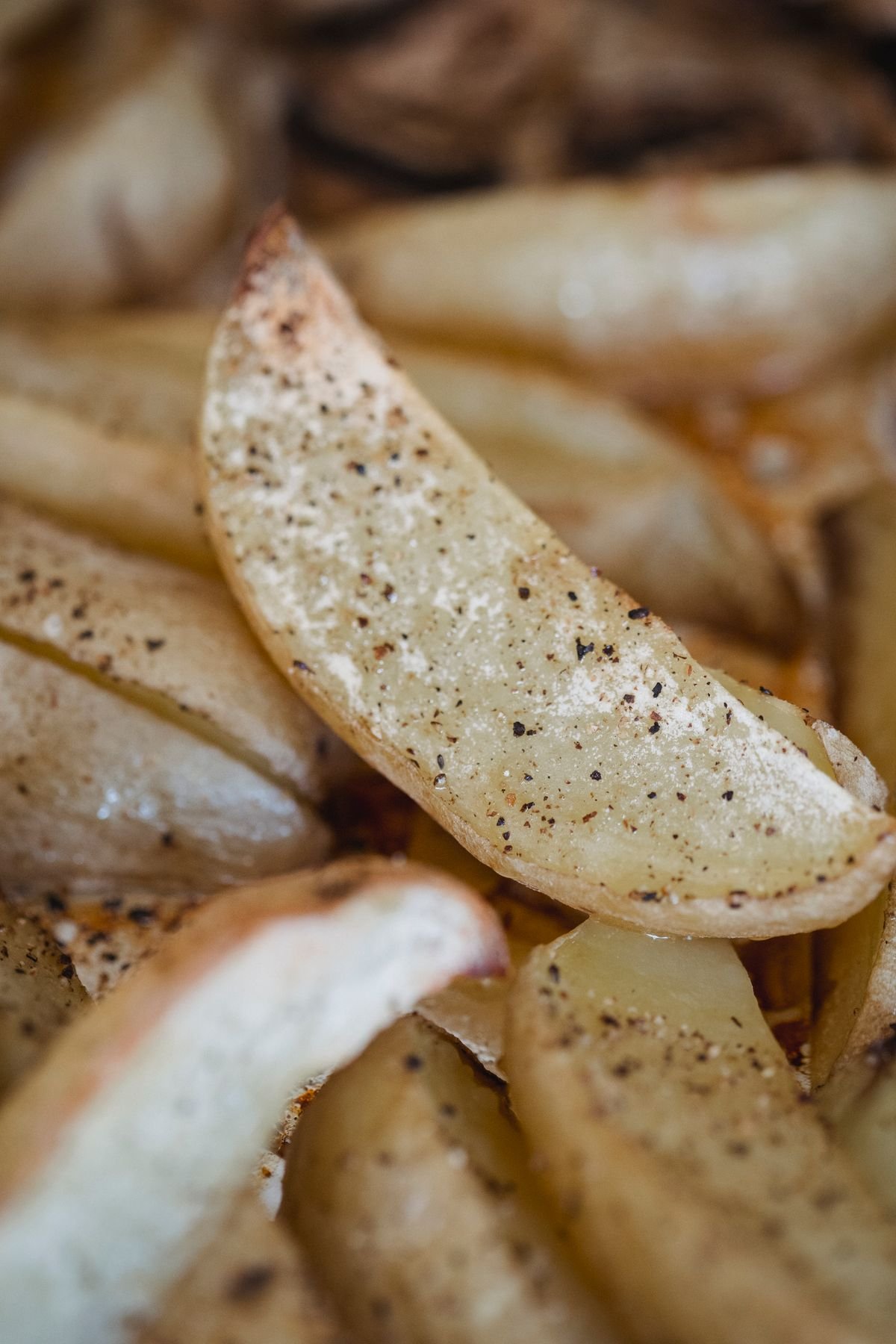
People assume oil makes a roasted potato crisp. It helps — fat conducts heat and fries the surface — but it was never the only path. Crispness comes from three things: a dry surface, starch, and hot air moving around the food. This recipe builds all three deliberately.
First, the soak and steam-dry remove water at every stage. Surface water has to boil off before browning can begin, and while it boils off, the potato is steaming, not roasting. Second, the baking soda parboil creates that rough, starchy coating — essentially a built-in crust. More surface area means more edges, and more edges mean more crunch. Third, the hot pan and single layer surround every piece with dry heat instead of its neighbors’ steam.
One more thing: add anything wet, like lemon juice, only at the table — at minute ten it would undo your work.
If you like this dry-heat logic, it is the same reason wedges crisp so well in fast-moving hot air — for nights when the oven is busy or you only need a small batch, try my crispy air fryer potato wedges made with the same cut-and-dry approach.
Common Mistakes to Avoid
Skipping the parboil. Raw chunks roasted without oil tend to dry outside before the inside cooks, giving leathery edges and firm centers. The parboil is the heart of the recipe, not an optional extra.
Crowding the pan. When pieces touch and pile up, they trap steam and come out soft no matter how long you roast. Use two pans. It is always worth it.
Starting on a cold pan. Without oil, initial contact with a preheated pan does real work. A cold pan means a slow, steamy start and a paler result.
Stirring too often. Every flip before the crust sets tears the crust. Roast, wait, flip once, finish. That is the rhythm.
Roasting too cool. At 375°F (190°C), oil-free potatoes cook but do not truly crisp. The 425°F (220°C) heat is doing a job. If your oven runs hot, drop to 400°F (200°C) and add a few minutes, but do not go lower.
Substitutions and Flavor Variations
Potato swaps. Sweet potatoes work with adjustments: they are moister and higher in sugar, so parboil only 4 to 5 minutes, expect softer edges and deeper caramelized spots, and watch them near the end. Baby potatoes are lovely — halve, parboil 6 to 7 minutes, and roast cut-side down. Fingerlings are great too, though their smooth skin gives a lighter crust.
Cornstarch-free. Arrowroot, tapioca starch, or potato starch all substitute in the same amount. Or skip starch entirely and lean on the parboil — you will still get good, honest crispness.
Smoky ranch style. Swap the herbs for extra garlic and onion powder, smoked paprika, 1/2 teaspoon dried dill, and a pinch of mustard powder. Finish with chives.
Spicy Cajun. Use a Cajun or Creole blend in place of the paprika, oregano, and pepper, plus a pinch of cayenne if you like real heat. Serve something cool alongside.
Lemon and herb. Keep the base seasoning, then toss the hot finished potatoes with the zest of 1 lemon, a squeeze of juice, and chopped parsley and dill. Bright and wonderful with fish.
Parmesan-style. Toss hot finished potatoes with 2 tablespoons finely grated Parmesan, or nutritional yeast for a dairy-free version with a similar savory note. Add it after roasting so it does not burn.
Rosemary and sea salt. Add 1 tablespoon finely chopped fresh rosemary to the seasoning — fresh rosemary is sturdy enough for the oven, unlike most fresh herbs — and finish generously with flaky salt.
Curried potatoes. Replace the paprika and oregano with 1 1/2 teaspoons curry powder and 1/2 teaspoon turmeric, and finish with cilantro and a squeeze of lime. Excellent in wraps or over rice.
What to Serve With Them
Roasted potatoes rarely clash with anything. For a weeknight dinner, serve them beside roasted vegetables and a green salad with a sharp dressing. They also belong on a breakfast plate in place of hash browns, with eggs, sautéed greens, and hot sauce.
For something heartier, these potatoes are a natural partner for chicken, since both love a hot oven and garlic-herb flavors. On nights when a tray of these is roasting, I often make juicy baked chicken breast at 400 alongside — the chicken rests while the potatoes take their final crisp, and dinner lands together with almost no juggling.
Other good pairings: baked salmon or white fish with lemon; lentil or chickpea curries, where the potatoes soak up sauce; burgers, where they stand in for fries; and grain bowls. A bowl of these with dipping sauces — ketchup, garlic aioli, honey mustard, or herbed yogurt — also makes a fine snacky dinner.
Storage, Freezing, and Reheating
Refrigerator. Cool the potatoes completely, then store in an airtight container for up to 4 days. Cooling fully before sealing keeps condensation — and therefore sogginess — to a minimum.
Freezer. Spread cooled potatoes on a parchment-lined tray, freeze until solid, about 1 hour, then transfer to a bag or container for up to 3 months. The texture will be slightly less fluffy after reheating, but the crust comes back well.
Reheating in the oven (best method). Heat to 400°F (200°C), spread potatoes in a single layer on a parchment-lined pan, and bake 8 to 12 minutes from the fridge, or 15 to 20 minutes from frozen with no thawing, until hot and crisp. Give them space, just as the first time.
Reheating in the air fryer. Excellent results at 375°F (190°C) for 4 to 6 minutes from the fridge, shaking once. Frozen potatoes need 8 to 10 minutes.
Microwave, honestly. It makes them hot but soft. If it is your only option, microwave a minute to take the chill off, then finish in a hot, dry skillet to restore some crust.
Using up leftovers. Chop cold potatoes into a breakfast hash, fold them into a frittata, or smash a few flat and re-roast for extra-crisp smashed potatoes.
Nutrition Information
The figures below are rough home-kitchen estimates for one serving, about one quarter of the recipe, based on standard ingredient values. They are not lab-tested, and your numbers will vary with potato type and size, salt and starch amounts, and portion. Treat them as a general guide only, not medical or dietary advice.
- Calories: approximately 185 kcal
- Carbohydrates: approximately 41 g
- Protein: approximately 5 g
- Fat: approximately 0.5 g (naturally occurring in the potatoes)
- Fiber: approximately 4 g
- Sodium: approximately 390 mg (varies with salting)
- Potassium: approximately 950 mg
- Sugar: approximately 2 g
Leaving out the oil saves roughly 100 to 120 calories and about 14 grams of fat per serving compared with a similar portion roasted in oil — while keeping the fiber, potassium, and vitamin C that make potatoes nutritious, especially with skins on.
Frequently Asked Questions
Can you really roast potatoes without any oil and still get them crispy?
Yes — properly crispy, not just acceptable. The crisp comes from a dry, starchy surface meeting hot air. The baking soda parboil roughs up the surface and creates that starchy layer, the steam-dry removes water, and the hot pan plus a single layer at 425°F (220°C) do the rest. Oil makes crisping more forgiving, but technique can do the same job.
Why do my oil-free potatoes stick to the pan?
Usually one of three things: the pan was not hot enough, there was no parchment or mat between potato and metal, or you moved them before the crust set. Line the pan, preheat it, and roast a full 20 minutes before flipping. A set crust releases on its own; if a piece resists, it needs another minute or two.
Do I have to parboil the potatoes first?
For the best result, yes. Parboiling cooks the centers so they turn fluffy instead of dense, and it creates the rough surface that crisps. Roasting from raw still works, but extend the time, expect firmer centers and smoother, less crunchy edges, and check that the largest pieces are fully tender before serving.
Can I make these in the air fryer instead?
Absolutely, and they are excellent. Follow the recipe through seasoning, then air fry at 400°F (200°C) for 18 to 22 minutes, shaking the basket every 6 or 7 minutes, until deeply golden and crisp. Work in a single layer and in batches if needed — a crowded basket steams potatoes just as surely as a crowded pan.
Which potatoes are best for roasting without oil?
Yukon Golds are the most reliable all-rounders, with creamy centers and thin skins you can leave on. Russets give the fluffiest insides and roughest, crunchiest crust but are more fragile after parboiling. Waxy red potatoes hold their shape best but crisp the least, so save those for salads and soups, where firmness is an advantage.
Is the baking soda safe, and can I taste it?
It is a standard baking ingredient used in a small amount, and it goes into the boiling water, not onto the finished potatoes — most of it drains away. You cannot taste it at all. Its only job is raising the pH of the water so the surfaces break down a little faster and get scruffy. Skip it if you prefer; the edges will simply be smoother and the crust lighter.
How do I keep seasoning from falling off without oil?
Season at the right moment: while the potatoes are hot and faintly steamy from draining, when their surfaces are just damp enough to grab spices. Tossing first with a tablespoon or two of aquafaba or broth helps if they seem too dry. Add delicate finishing flavors like fresh herbs and flaky salt after roasting.
Can I prep these ahead of time?
Yes. Soak cut potatoes in cold water in the fridge up to 24 hours, then parboil and roast when ready. Or parboil, season, and refrigerate on the pan a few hours ahead, then roast from the fridge, adding 3 to 5 minutes. A double batch for the week is a smart move.
Why did my potatoes come out soggy instead of crisp?
Almost always, it comes back to water or crowding. Were they steam-dried properly? Was the pan crowded? Was the oven fully preheated to 425°F (220°C)? Did anything wet go on before roasting? Fix whichever sounds familiar, and the next batch will very likely crisp.
Are oil-free roasted potatoes actually healthy?
Potatoes are a nutritious whole food — a good source of potassium, vitamin C, vitamin B6, and fiber, especially with skins on. Roasting without oil keeps fat and calories low. Portion and accompaniments matter, of course, but as side dishes go, this is a wholesome one that does not feel like a compromise.
Conclusion
If you take one idea away, let it be this: crispiness is a technique, not an ingredient. A short soak, a bubbling pot with a pinch of baking soda, a good shake, a hot pan, and breathing room in the oven — that is the whole secret, and none of it is hard. Once you have done it once, you will do it from memory.
So grab that bag of potatoes, preheat the oven, and give these roasted potatoes without oil a fair chance. Serve them hot, salt generously at the end, and eat the crispiest piece yourself — cook’s privilege. Happy roasting.
One Comment