Easy 3 Ingredient Banana Pancakes (Fluffy, Quick & Healthy)
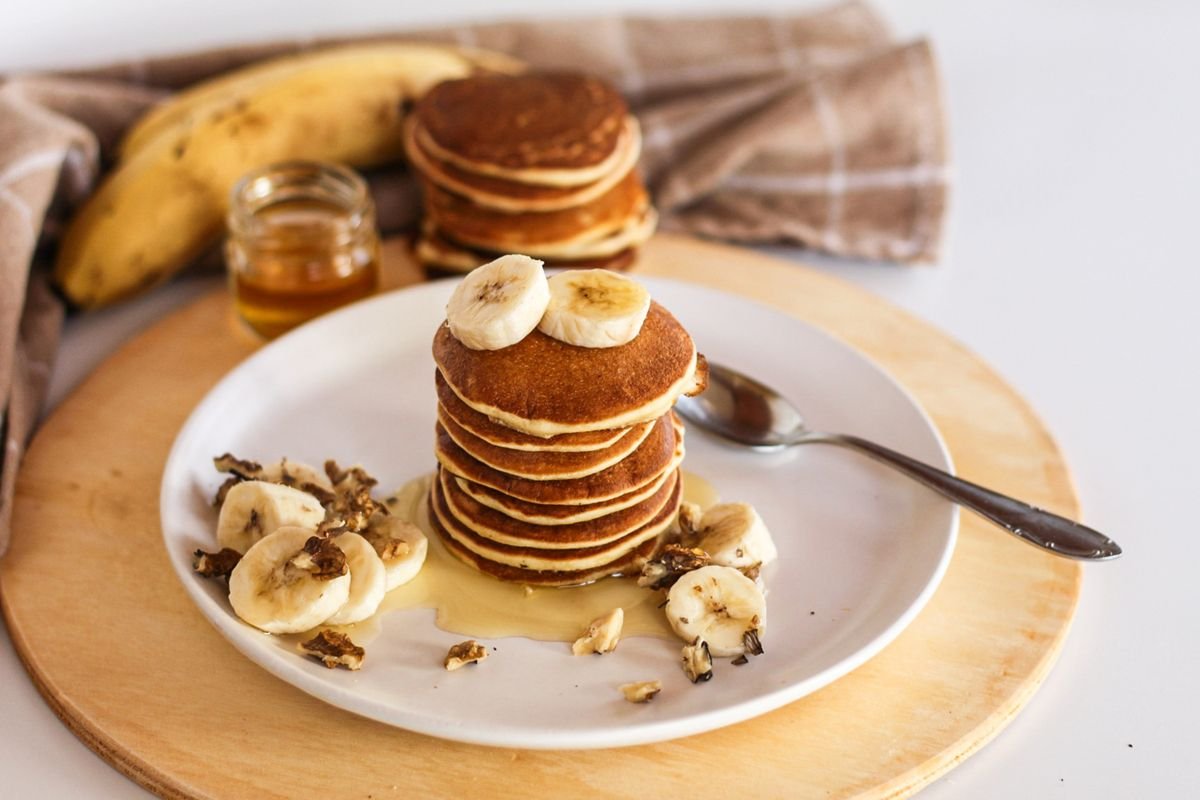
There is a very specific kind of morning that calls for these pancakes. It is the morning when there are two bananas on the counter that have gone properly spotty, the fridge is looking a little bare, and everyone is hungry right now — not in forty-five minutes, not after a trip to the store. That is exactly when these easy 3 ingredient banana pancakes earn their place in your kitchen. You mash, you whisk, you pour, and a few minutes later there is a warm stack on the table that tastes like banana bread and a lazy weekend had a very good idea together.
What surprises people the first time they make them is how much pancake you get from so little. There is no box of mix, no long list of leaveners and gums, and no separate bowl for dry ingredients. Just ripe bananas, eggs, and flour — three everyday ingredients that most kitchens already have. The bananas bring natural sweetness and moisture, the eggs bring structure and lift, and the flour gives the batter enough body to actually flip, puff, and hold together like a real pancake should. These are not the thin, eggy banana-egg fritters you may have tried before and been a little disappointed by. The flour makes all the difference, and a couple of small technique tricks, which I will walk you through below, make them genuinely fluffy.
This recipe is for busy parents packing a lot into a weekday morning, for students and first-apartment cooks working with a tiny pantry, for anyone trying to use up bananas instead of throwing them away, and for anyone who wants a breakfast that feels like a treat but is built from real, simple food. The pancakes are soft in the middle, lightly golden at the edges, and sweet enough that little kids will happily eat them plain, straight off the plate, while they are still warm. For grown-ups, a drizzle of maple syrup or a spoonful of yogurt on top turns them into something you would be pleased to sit down to with a cup of coffee.
You can have the first pancake out of the pan in about five minutes and the whole batch done in fifteen. Clean-up is one bowl, one fork, and a skillet. If that sounds like your kind of breakfast, let’s get into it — because once you have made these once, you will probably start buying an extra bunch of bananas on purpose, just so some of them ripen too far.
Why You’ll Love This Recipe
- Truly three ingredients. Bananas, eggs, and flour. That is the whole shopping list, and there is a good chance all three are already in your kitchen.
- Ready in about 15 minutes. No resting the batter, no separating eggs, no special equipment. Mash, mix, and cook.
- Naturally sweetened by the bananas. Very ripe fruit does the sweetening work, so there is no added sugar in the batter at all.
- Soft and fluffy, not eggy or flimsy. The flour gives these real pancake structure, and a gentle whisk and a hot-enough pan give them lift.
- Kid-approved and lunchbox-friendly. The leftovers reheat well and are sturdy enough to pack, spread with a little nut butter.
- Easy to adapt. Swap the flour for oat flour to make them gluten-free, or stir in a handful of blueberries or chocolate chips when you want to dress them up.
- A smart use for overripe bananas. The bananas that are too soft and spotty for snacking are, honestly, perfect for this.
Ingredients
This recipe makes about 8 small pancakes, roughly 4 inches (10 cm) across — enough for 2 to 3 people, depending on appetites and what else is on the table. They are intentionally a little smaller than diner pancakes, because smaller pancakes are far easier to flip and they cook through more evenly with this moist batter.
- 2 large very ripe bananas (about 1 cup / 240 ml mashed, roughly 230 g peeled) — the riper, the better. Look for skins that are heavily speckled with brown or even mostly brown. Ripe bananas mash smoothly, taste much sweeter, and blend into the batter without leaving big raw chunks.
- 2 large eggs, at room temperature if you can manage it — eggs are the binder and the lift here. They hold the batter together in the pan and trap little air bubbles as you whisk, which is a big part of where the fluffiness comes from.
- 3/4 cup (95 g) all-purpose flour — this is the ingredient that turns banana-egg batter into actual pancakes. It gives body, a tender crumb, and edges that brown nicely. Spoon the flour into the cup and level it off rather than scooping, so you do not pack in too much and end up with heavy pancakes.
That is it for the base recipe. Everything below is optional, and I want to be clear about that, because the promise of this recipe is three ingredients and it absolutely delivers on it. If you have them and want to use them, a pinch of salt wakes up the flavor, 1/2 teaspoon of ground cinnamon adds warm banana-bread character, and 1/2 teaspoon of baking powder will give you an extra nudge of lift. None of them are required, and the pancakes are delicious without them. Think of them as seasoning, the way you might add pepper to eggs — nice, but the dish stands on its own.
A quick note on the bananas, because they matter more here than in almost any other pancake recipe. Underripe, yellow-green bananas will not work well. They are starchy, not very sweet, and they mash into a lumpy paste that makes dense, bland pancakes. If your bananas are still firm and yellow, give them a day or two on the counter. In a hurry, you can ripen them in a low oven — 300°F (150°C) for 15 to 20 minutes, until the skins turn black and the fruit inside is soft and fragrant. Let them cool a little before you peel and mash them.
Equipment
You do not need anything special, which is part of the charm of this recipe.
- A medium mixing bowl
- A fork or potato masher, for the bananas
- A whisk or a second fork, for the eggs
- A measuring cup and spoons
- A large nonstick skillet or a well-seasoned cast iron pan, or an electric griddle
- A thin, flexible spatula for flipping
- A ladle or a 1/4-cup (60 ml) measure for portioning the batter
A nonstick pan makes life easiest here because this batter is moist and a little delicate in its first minute of cooking. If you are using cast iron, just make sure it is well seasoned and properly preheated, and use a touch more butter or oil for the first batch.
Step-by-Step Instructions
- Mash the bananas until almost smooth. Peel the bananas and drop them into your mixing bowl. Mash with a fork or potato masher until you have a thick, pourable puree with only very small lumps left. This takes about a minute of determined mashing. A few tiny lumps are fine and even nice, but big chunks will create wet pockets in the finished pancakes, so take the extra twenty seconds to get it fairly smooth. The puree should look glossy and smell intensely sweet and fruity — that aroma is your first sign the bananas were ripe enough.
- Whisk in the eggs well. Crack the eggs into the banana puree and whisk for a full 30 to 45 seconds. You are not just combining here; you are beating a little air into the mixture, and that air is one of your two sources of lift, since there is no baking soda in this batter. The mixture should lighten slightly in color and look a bit frothy around the edges. Room-temperature eggs whisk up with more volume than cold ones, which is why it helps to take them out of the fridge when you start gathering ingredients.
- Add the flour and stir just until combined. Sprinkle the flour over the banana mixture and fold it in gently with the whisk or a spatula, stirring only until you no longer see dry streaks — about 10 to 15 strokes. Small lumps are completely fine. Do not keep stirring to chase a perfectly smooth batter. Overmixing develops the gluten in the flour and turns tender pancakes tough and rubbery, and it also knocks out the air you just whisked in. The finished batter should be thick, like a heavy cake batter, and should fall off a spoon in a slow ribbon. If it seems soupy — which can happen with very large bananas — stir in 1 extra tablespoon of flour. If it seems stiff and dough-like, add a splash of milk or water, a teaspoon at a time.
- Rest the batter while the pan heats. Set the bowl aside for 5 minutes. This short rest lets the flour hydrate, which thickens the batter slightly and helps the pancakes hold together and rise more evenly. Meanwhile, place your skillet over medium-low to medium heat and let it preheat for 2 to 3 minutes. The heat setting matters a lot with this recipe: banana sugars brown fast, so a screaming-hot pan will scorch the outside before the middle sets. You want steady, moderate heat.
- Grease the pan lightly. Add about 1/2 teaspoon of butter or a light slick of neutral oil or cooking spray, and swirl or wipe it around so the surface is just barely coated. The pan is ready when a few drops of water flicked onto it sizzle and dance and evaporate within a couple of seconds. If the butter browns instantly and smells nutty-dark, the pan is too hot — take it off the heat for 30 seconds and turn the dial down a notch.
- Portion small pancakes. Scoop about 1/4 cup (60 ml) of batter per pancake into the pan, leaving space between them, and gently nudge each one into a round about 4 inches (10 cm) wide. You should fit 3 or 4 in a large skillet. Resist the urge to make big pancakes. This batter is moister and more delicate than a standard buttermilk batter, and small pancakes set faster, flip cleanly, and stay fluffy instead of spreading into thin crepes.
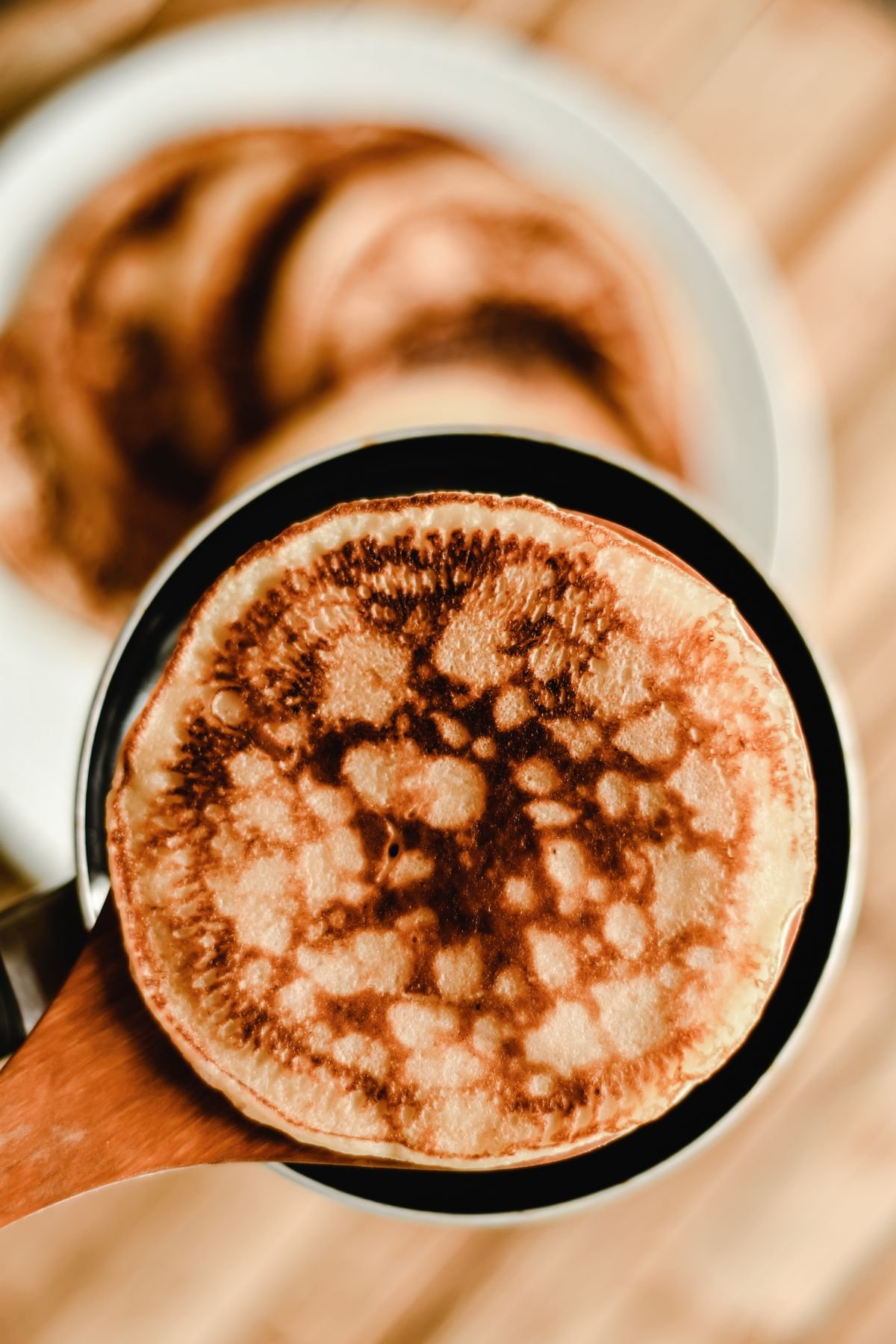
- Cook the first side until set at the edges, 2 to 3 minutes. Leave them alone — no pressing, no peeking every ten seconds. Watch for the signs: the edges will look dry and set rather than wet and shiny, small bubbles will appear on the surface and the ones near the edge will start to pop and stay open, and the underside, when you slide a spatula under a corner and peek, will be a deep golden brown. Because of the banana sugars, these brown a shade darker than plain pancakes, and that is normal and delicious, as long as they are not dark brown to black.
- Flip once, gently, and cook the second side for 1 to 2 minutes. Slide your spatula fully under the pancake in one confident motion, lift, and turn it over smoothly. If one breaks, do not worry — press the pieces together with the spatula and it will mostly mend as it finishes cooking, and it will still taste wonderful. The second side needs less time. The pancake is done when it feels springy when pressed lightly in the center, looks set and matte on top, and has puffed up noticeably. If you want to be certain, the center should not jiggle like raw batter when you shake the pan gently.
- Keep finished pancakes warm and repeat. Move the cooked pancakes to a plate in a low oven, about 200°F (95°C), or simply tent them loosely with foil while you cook the rest. Wipe the pan with a paper towel between batches if any browned bits are building up, and add a fresh whisper of butter or oil each time. Adjust the heat down slightly as you go — pans hold heat, and the last batch often cooks faster than the first. Serve as soon as the final batch comes out, while they are still soft and steamy.
How Three Ingredients Actually Become Fluffy Pancakes
It is fair to be a little skeptical. Pancake recipes usually call for baking powder, baking soda, milk, butter, sugar, and salt, so how does a list this short produce something fluffy instead of a flat banana omelet? It helps to know what each ingredient is doing, because once you understand the jobs, the little technique details above make a lot more sense.
The eggs are doing double duty. Their proteins set as they heat, which is what turns liquid batter into a solid, sliceable pancake instead of a puddle. At the same time, whisking eggs with the wet banana puree incorporates air, and those tiny bubbles expand in the hot pan and lift the batter from the inside. This is the same basic principle behind a soufflé, just far more forgiving. The flour is your structure and your crumb. It absorbs moisture from the bananas and eggs, swells during that short rest, and gives the set egg something to hold onto, so the finished texture reads as soft bread-like pancake rather than custard. The bananas, meanwhile, provide the liquid, the sweetness, and a lot of the tenderness. Their natural sugars also caramelize in the pan, which is why the outside turns such a beautiful deep gold and smells almost like banana bread toasting.
There are limits, and it is honest to name them. These pancakes will never be quite as tall and cakey as a bakery-style buttermilk stack loaded with leavener, and they are a little more delicate to flip. What they are is tender, moist, richly flavored, and impressively puffy for something so simple — especially eaten fresh and hot, which is when that lift is at its best.
Pro Tips for the Fluffiest Results
Use bananas that look almost past saving. Spotty, soft, and intensely fragrant is the goal. The riper the banana, the sweeter and smoother the batter, and the better the pancakes taste without any added sugar.
Whisk the eggs like you mean it. That 30 to 45 seconds of whisking before the flour goes in is not a fussy extra step. It is where your lift comes from. Once the flour is in, though, switch to a gentle hand — vigorous mixing after that point only makes pancakes tough.
Keep the heat moderate and patient. Medium-low to medium is the sweet spot on most stoves. Banana batter scorches quickly, and a slightly longer cook at gentler heat gives the center time to set and the bubbles time to do their work.
Make them small. Four-inch pancakes are not just cute. They are the size this batter can handle gracefully — easy to flip, quick to cook through, and thick enough to stay fluffy.
Do not press them with the spatula. It is tempting, but pressing squeezes out the air and the steam that are puffing the pancake up, and you will end up with a denser result. Let the heat do the work.
Serve them right away. Like most pancakes, these are at their fluffiest in the first few minutes off the pan. If you are cooking for a crowd, the low-oven trick in the steps keeps earlier batches warm without drying them out, and doubling the recipe works perfectly — just use two pans or a big griddle to keep things moving.
Common Mistakes to Avoid
The most frequent problem is a pan that is too hot. The pancakes look beautifully browned, you plate them up, and the middle is still wet and gummy. If that happens, turn the heat down, give the next batch a full 3 minutes on the first side, and make them a touch smaller. The second most common issue is using bananas that are not ripe enough. There is no rescuing bland, starchy batter with toppings alone, so wait for the spots.
Overmixing after adding the flour is another easy trap, and so is adding too much flour to fix a batter that looks thinner than you expected. This batter is supposed to be looser than a boxed-mix batter. Measure the flour lightly, trust the rest period to thicken things up, and only add that extra tablespoon if the batter truly pours like soup. Finally, do not try to flip too early. If the spatula meets resistance and the pancake feels like it is tearing, it is not ready. Give it another 30 seconds — a properly set pancake releases willingly.
Substitutions and Variations
Gluten-free: Swap the all-purpose flour for the same amount of oat flour (3/4 cup / about 85 g), or use finely ground rolled oats blended until powdery. Oat flour makes the pancakes a little heartier and adds a lovely, wholesome flavor that suits the banana. Let oat-flour batter rest the full 5 minutes, since oats absorb liquid more slowly.
Flour-free version: You can leave the flour out entirely and cook just the banana and eggs, but go in with the right expectations — you will get soft, thin, crepe-like rounds that are more like sweet banana fritters. They are tasty, especially with berries, but they will not be fluffy pancakes. Cook them even smaller and even more gently.
Add-ins: Once the base works for you, the batter welcomes extras. Fold in 1/4 cup (40 g) of fresh blueberries, a tablespoon or two of mini chocolate chips, or 2 tablespoons of finely chopped walnuts or pecans. A pinch of cinnamon or a few drops of vanilla extract, if you keep them on hand, deepen the banana-bread flavor beautifully. Keep add-ins modest — too much extra weight in the batter will drag down the lift and make flipping harder.
Protein boost: A spoonful of Greek yogurt or a tablespoon of nut butter whisked in with the eggs makes the pancakes a little more filling. Peanut butter and banana is a classic pairing for a reason, and it makes these sturdy enough to stand in as a post-workout breakfast.
Banana-oatmeal style: Replace half the flour with quick oats for a chewier, more substantial pancake that eats almost like baked oatmeal in pancake form. Kids tend to love the texture, and they hold up especially well in lunchboxes.
What to Serve With Them
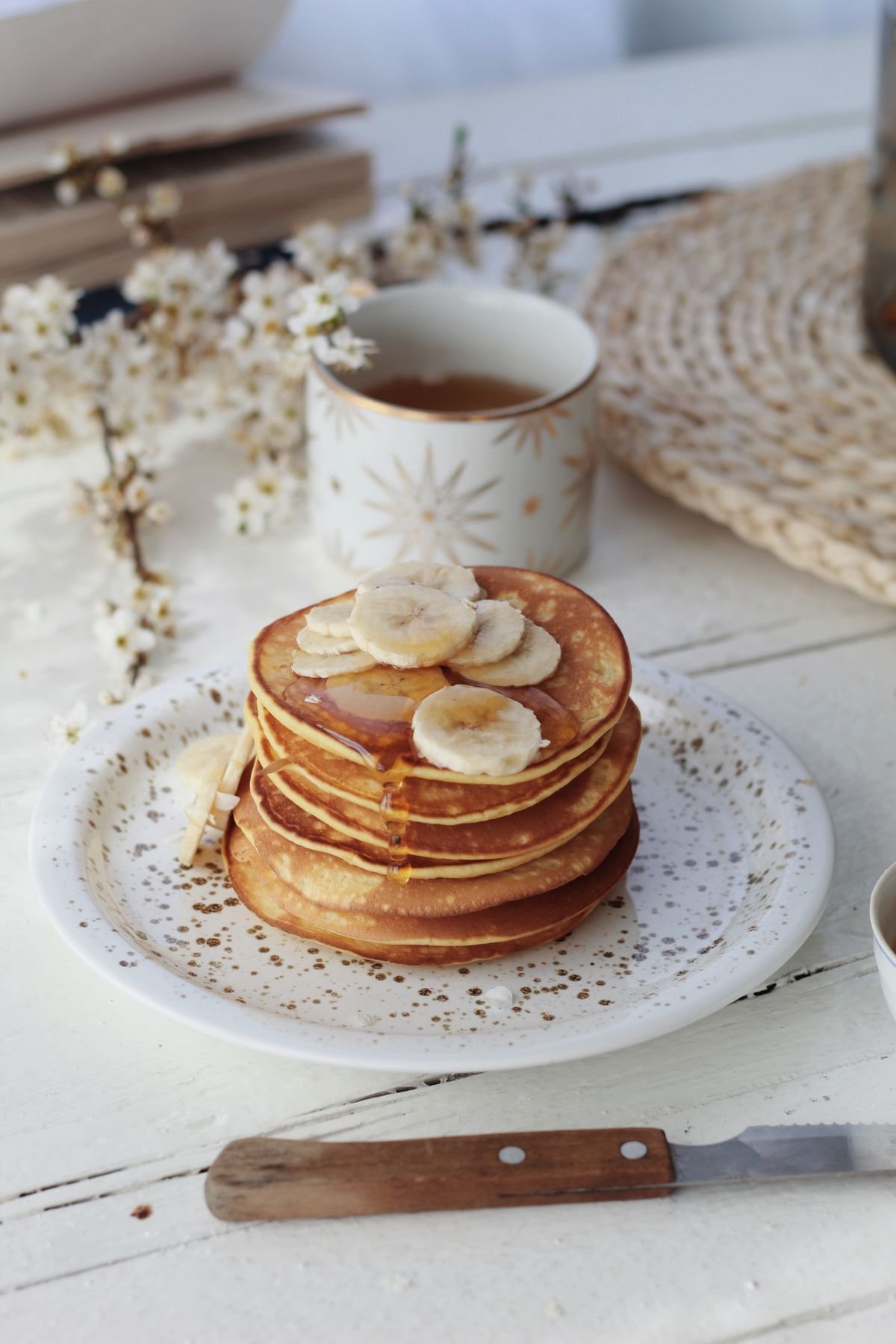
On their own, warm from the pan, these pancakes need almost nothing. But a good topping turns a simple breakfast into a small event. Classic maple syrup is the obvious partner, and a little knob of butter melting over the top of the stack is hard to argue with. Fresh berries — sliced strawberries, blueberries, or raspberries — add brightness and a tart contrast to the sweet banana. A dollop of Greek yogurt or whipped cream, extra banana slices, a sprinkle of chopped nuts, or a smear of peanut or almond butter all work beautifully. For a dessert-leaning version, try a spoonful of chocolate-hazelnut spread and a dusting of powdered sugar.
For a fuller brunch spread, serve them alongside something savory and something crisp for contrast — scrambled eggs, a simple fruit salad, or crispy bacon if that is your style. They also pair naturally with other easy, from-scratch breakfast favorites. On mornings when you are feeding a crowd and want the oven and the stovetop working together, our guide to roasted potatoes without oil gives you a hands-off, crispy side that balances the soft sweetness of the pancakes. And if your crew leans more toward crunchy, golden sides, the method for crispy air fryer potato wedges makes a fun, dippable addition to a big weekend breakfast table. A pot of coffee or a glass of cold milk, and you have a breakfast that feels generous without anyone having worked very hard for it.
Storage, Freezing, and Reheating
If you have leftovers — and with kids around, that is never guaranteed — let the pancakes cool completely before storing them, so trapped steam does not make them soggy. In the refrigerator, stack them with a small piece of parchment between layers if you like, seal them in an airtight container, and they will keep well for up to 3 days.
To freeze, lay the cooled pancakes in a single layer on a parchment-lined baking sheet and freeze for about an hour, until solid. Then transfer them to a freezer bag or container, with parchment between them if you want to grab them one at a time. They keep well in the freezer for up to 2 months. This is a genuinely useful meal-prep trick: a freezer bag of these on a frantic morning feels like a gift from your past self.
Reheating is easy, and you have options. The toaster is my favorite for one or two pancakes — a minute or two on a medium setting brings back the lightly crisp edges. The microwave works for speed: 20 to 30 seconds for a single pancake, adding a few seconds at a time, though they will be softer. From frozen, either microwave in 30-second bursts until warm or toast straight from frozen on a slightly higher setting. A low oven, 300°F (150°C) for about 5 minutes, is best when you are reheating a whole batch for the table. Avoid reheating them repeatedly — like most pancakes, they dry out a little each time.
Nutrition Information
The figures below are rough home-kitchen estimates for one serving of 2 pancakes (one quarter of the batch), made with the three base ingredients only and cooked with a light coating of spray or butter in the pan. They do not include syrup, butter, or other toppings, which can add up quickly — a tablespoon of maple syrup adds about 52 calories and 12 grams of sugar on its own.
- Calories: approximately 185
- Protein: approximately 6 g
- Carbohydrates: approximately 33 g
- Fiber: approximately 2.5 g
- Total fat: approximately 3.5 g
- Sugar: approximately 12 g (naturally occurring, from the bananas)
- Sodium: approximately 35 mg
Treat these numbers as a helpful guide rather than a precise measurement. Your actual values will shift with the size and ripeness of your bananas, the exact flour you use, and your serving sizes. What holds true regardless is the overall profile: real fruit, whole eggs, and plain flour, with no added sugar in the batter and a satisfying mix of carbs and protein to start the day.
Frequently Asked Questions
Can I make these pancakes without flour at all?
Yes, but the result will be quite different. Banana and egg alone cook into thin, delicate, crepe-like rounds that are soft and sweet but not fluffy, and they need very gentle handling in the pan. The flour is what gives this recipe its pancake structure, so if you need a flour-free option, oat flour is a better swap than leaving flour out entirely.
Why are my banana pancakes soggy or gummy in the middle?
That almost always means the pan was too hot or the pancakes were too big, so the outside browned before the center could set. Turn the heat down to medium-low, make the pancakes about 4 inches across, and give the first side a full 2 to 3 minutes. Also make sure your bananas are mashed well, since large chunks create wet spots in the crumb.
How ripe do the bananas really need to be?
Very ripe — heavily speckled or mostly brown skins, soft flesh, and a strong, sweet smell. Underripe bananas are starchy and not sweet enough, and they will make bland, dense pancakes. If your bananas need help, bake them in their skins at 300°F (150°C) for 15 to 20 minutes until the skins turn black, then cool, peel, and mash.
Can I make the batter ahead of time?
It is best cooked right away, because the whisked-in air fades as the batter sits and the banana darkens. If you need a head start, mash the bananas and refrigerate them for a few hours, then whisk in the eggs and flour just before cooking. Leftover cooked pancakes, on the other hand, store and reheat beautifully, so make the full batch instead.
Are these pancakes healthy?
They are a wholesome, simple option: real bananas, eggs, and flour, with no added sugar or oil in the batter and natural fiber and protein built in. Like any pancake, what you put on top matters — fresh fruit and yogurt keep things light, while lots of syrup and butter make them more of a treat. The nutrition figures above are estimates to help you judge a serving for yourself.
Can I double or triple this recipe?
Absolutely. The proportions scale cleanly — just keep the ratio of 1 banana to 1 egg to about 6 tablespoons (roughly 1/3 to 1/2 cup) of flour per banana consistent, and it works at any batch size. For a crowd, cook on a large electric griddle or use two pans so the first pancakes are not cold by the time the last ones finish.
What can I use instead of eggs?
Eggs do a lot of work here — binding, setting, and lifting — so swaps change the texture noticeably. A flax egg (1 tablespoon ground flaxseed mixed with 3 tablespoons water, rested 5 minutes) per egg will bind the batter and produce softer, denser pancakes that still taste great. Keep them small and cook them a little longer on gentle heat so they set through.
Why did my pancakes turn out dark or burn so fast?
Banana sugars caramelize and brown much faster than plain pancake batter, especially if the pan was preheated on high or held a lot of residual heat from a previous batch. Cook over medium-low to medium heat, wipe out darkened butter between batches, and judge doneness by the set edges and bubbles as well as color. A deep golden brown is perfect; anything approaching black means the heat needs to come down.
Can I add baking powder, and will it still be a 3 ingredient recipe?
A 1/2 teaspoon of baking powder will make the pancakes a bit taller and lighter, and many people keep it in the recipe once they try it. Strictly speaking, that makes it a four-ingredient batter, which is why it is listed here as optional rather than part of the base recipe. The three-ingredient version is genuinely fluffy on its own when you whisk the eggs well and mind the pan heat, so try it as written first.
Are these good for babies and toddlers?
They are a popular choice for little eaters because they are soft, naturally sweet, and made from simple ingredients, and the small size is easy for small hands to hold. For babies, serve them plain, cut into strips or bite-size pieces, and skip syrup and honey entirely — honey should never be given to babies under 12 months. Always let them cool properly and supervise young children while they eat.
Conclusion
Some recipes earn a permanent place in your rotation not because they are impressive, but because they are reliable in the exact moments you need them. These easy 3 ingredient banana pancakes are that kind of recipe. Two spotty bananas, a couple of eggs, and a scoop of flour become a warm, golden, genuinely fluffy breakfast in about fifteen minutes, with one bowl to wash and nothing fancy to buy. They use up fruit that might otherwise be wasted, they make kids happy without any added sugar in the batter, and they are forgiving enough for a sleepy cook on a weekday morning.
Make them once exactly as written, paying attention to the ripe bananas, the good whisk, and that moderate pan heat. Then make them your own — oat flour, blueberries, a pinch of cinnamon, a smear of peanut butter. However you top them, I hope they turn a rushed morning into a slightly better one, the way a warm stack of pancakes somehow always does.
One Comment