Crispy Air Fryer Potato Wedges (Golden, Crunchy & Easy)
There is something deeply satisfying about a good potato wedge. It has that thick, hearty bite you do not get from a skinny fry, a fluffy, steaming center, and — when it is done right — edges that are properly golden and crisp enough to hear when you bite in. These crispy air fryer potato wedges give you all of that without a pot of bubbling oil, without heating up the whole kitchen with the oven, and without the slightly sad, limp results that so often come from baking wedges on a sheet pan. They come out of the air fryer deeply golden, crunchy on the outside, tender in the middle, and seasoned all the way around.
The secret is not complicated, and that is exactly why this recipe works so well. A short soak in cold water pulls away excess surface starch, a thorough pat-dry lets the hot air do its job, and a simple, well-balanced seasoning blend with just enough oil helps every wedge crisp evenly. The air fryer circulates heat so efficiently that you get that fried texture in about 20 minutes, with a flip halfway through and almost no hands-on time. No deep fryer, no splattering stovetop, no long preheat.
This is a recipe you will make on repeat — for busy weeknights, game day snacking, and burgers that deserve better than frozen fries. If you have russet potatoes, a few pantry spices, and an air fryer, you are most of the way there already.
Why You’ll Love This Recipe
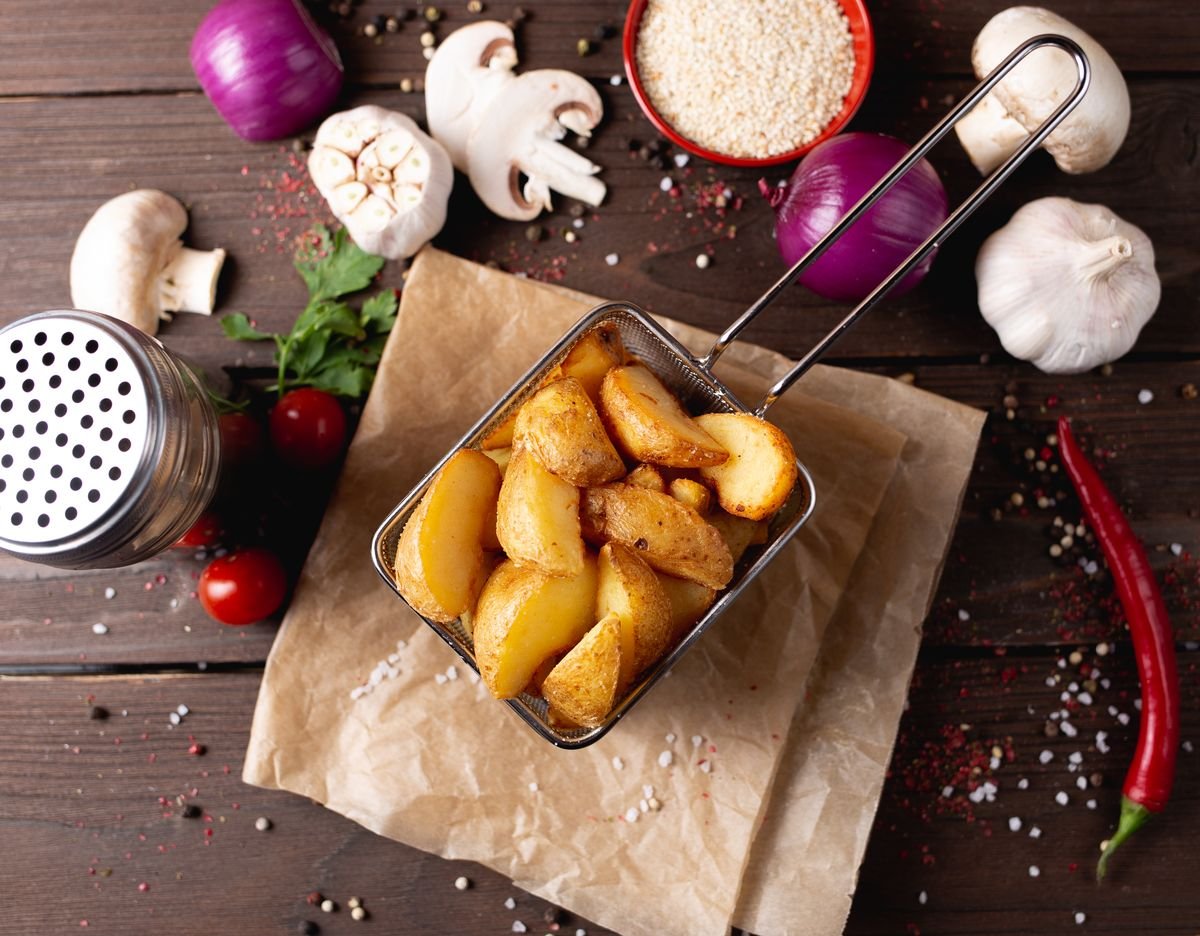
- Truly crispy, not just browned: The soak, the dry, and cooking in a single layer give you real crunch on the edges with a soft, fluffy center.
- So much less oil: You need only about 2 tablespoons of oil for a whole batch, compared to cups of oil for deep-frying.
- Fast and hands-off: About 10 minutes of prep and roughly 20 minutes in the air fryer, with just one flip in the middle.
- Pantry seasoning: Everything in the spice blend is a common staple — no special shopping trip required.
- Endlessly adaptable: Keep them classic, make them spicy, cheesy, herby, or ranch-style with the simple swaps below.
- Kid-friendly and crowd-friendly: Mild, salty, dippable, and easy to make in big batches for a group.
Ingredients
This recipe serves 4 as a side dish. You can easily halve it for two people or cook it in batches for a crowd — just keep the wedges in a single layer each time, which matters more than the total quantity.
- 2 pounds (about 900 g) russet potatoes, about 4 medium potatoes — Russets are the best choice here by a wide margin. Their high starch content and low moisture give you the fluffiest interior and the crispiest exterior. Yukon Gold potatoes also work and have a more buttery flavor, but they will be a little less shatter-crisp. Red potatoes hold their shape well but tend to stay denser and waxier inside. If you can, choose russets of a similar size so the wedges cook at the same rate.
- 2 tablespoons olive oil or avocado oil — The oil helps the seasoning stick, encourages even browning, and is a big part of that golden color. Avocado oil handles high heat very well and has a neutral flavor. Regular olive oil works beautifully too. You do not need much — too much oil will actually make the wedges steam and soften instead of crisping.
- 1 teaspoon fine sea salt, plus more to finish — Salt inside the seasoning blend seasons the wedges throughout, and a tiny pinch of flaky salt at the end adds a lovely finishing pop. If you are using table salt, which is denser, reduce slightly to about 3/4 teaspoon.
- 1 teaspoon garlic powder — Garlic powder distributes evenly and will not burn the way fresh minced garlic can at high heat. It gives that savory backbone everyone expects from a great wedge.
- 1 teaspoon smoked paprika (or sweet paprika) — Smoked paprika adds gentle warmth and helps the wedges take on a rich, appetizing color. Sweet paprika is milder and works just as well if that is what you have.
- 1/2 teaspoon onion powder — A quiet supporting flavor that rounds out the blend and adds depth without any chopping.
- 1/2 teaspoon freshly ground black pepper — Freshly ground pepper has more bite and aroma. Use a little less if you are serving small children who prefer things mild.
- 1/4 teaspoon cayenne pepper (optional) — Just enough for a gentle background heat. Leave it out for a fully mild batch, or double it if your household likes spice.
- 1 tablespoon cornstarch (optional, for extra crunch) — This is my favorite small trick. A light dusting of cornstarch mixed with the seasoning absorbs surface moisture and forms an especially crisp, delicate crust in the air fryer. It is completely optional — the wedges are still delicious without it — but if maximum crunch is your goal, do not skip it.
- 1 tablespoon chopped fresh parsley (optional, for serving) — Adds color and a fresh finish. Chives or a little grated Parmesan are lovely alternatives.
- Your favorite dipping sauce, for serving — Ketchup, garlic aioli, ranch, honey mustard, or a simple sour cream and herb dip all work wonderfully.
A note on timing: toss the wedges with oil first, then sprinkle the seasoning over and toss again, so the spices cling evenly instead of clumping.
Equipment You Will Need
- Air fryer (basket-style or oven-style, at least 4-quart capacity is ideal for this batch size)
- Large bowl for soaking and seasoning
- Sharp chef’s knife and a stable cutting board
- Clean kitchen towel or paper towels for drying — this step matters, so have plenty ready
- Tongs or a spatula for flipping the wedges halfway through
- Measuring spoons
No special gadgets are required. If your air fryer is small, cook in two batches rather than crowding — the second batch often cooks a minute or two faster because the fryer is already hot.
Step-by-Step Instructions
1. Scrub and cut the potatoes
Scrub the potatoes well. I leave the skin on — it crisps beautifully and saves peeling time — but you can peel them if you prefer. Cut each potato in half lengthwise, place each half cut-side down, then cut into 3 or 4 long wedges, roughly 3/4 to 1 inch thick. Even thickness matters more than perfect looks, so thin wedges do not over-brown before thick ones are tender.
2. Soak the wedges in cold water for 20 to 30 minutes
Cover the cut wedges with cold water and soak for 20 to 30 minutes. This pulls excess starch off the surface — the starch that makes wedges steam and turn gummy instead of crisp. The water will turn cloudy, which is exactly what you want. Even a 10-minute soak helps if you are short on time, and wedges can soak, covered, in the refrigerator for several hours ahead.
3. Drain and dry them really, really well
Drain and rinse the wedges, then spread them on a clean towel and pat dry on all sides. Let them sit a few minutes while the air fryer preheats. This is the most important step for crispiness — wet potatoes steam, and steaming is the enemy of crunch. They should feel dry to the touch before any oil goes on.
4. Preheat the air fryer
Preheat your air fryer to 400°F (200°C) for 3 to 5 minutes. Not every model requires preheating, and yours will still work without it, but starting with a fully hot basket helps the wedges begin crisping immediately instead of slowly warming up and steaming. While it preheats, finish seasoning the potatoes.
5. Season the wedges
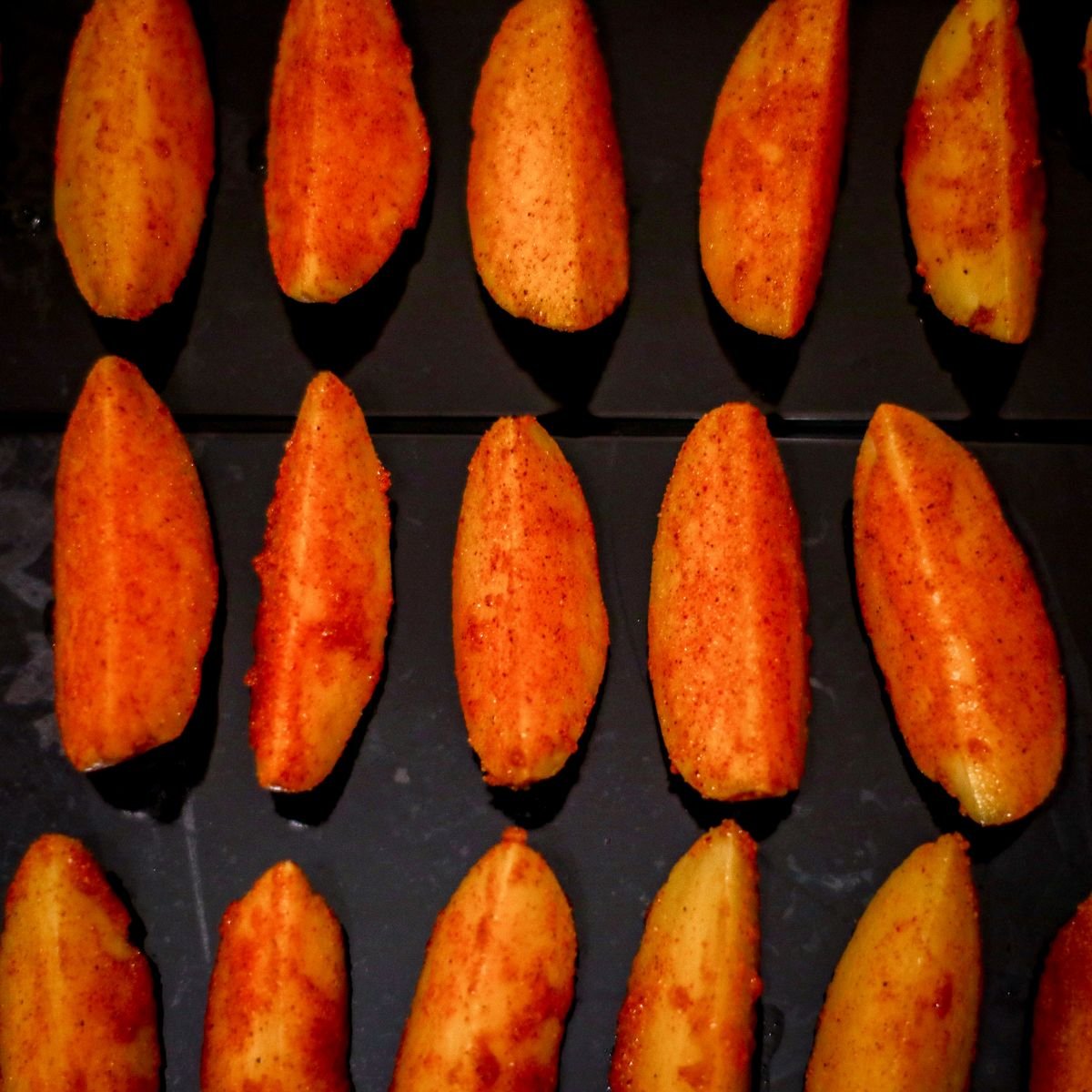
Return the dry wedges to a large bowl, drizzle with oil, and toss until every wedge has a light, even sheen. Sprinkle over the salt, garlic powder, paprika, onion powder, black pepper, cayenne and cornstarch if using, and toss again until evenly coated with no clumps of spice left in the bowl.
6. Arrange in a single layer
Arrange the wedges in a single layer with a little space between them, skin-side down where you can. Air needs to circulate to crisp them — stacked wedges stay pale and soft where they touch. If the batch does not fit, cook in two batches; two crisp batches always beat one crowded, soggy one.
7. Air fry, flipping halfway
Cook at 400°F (200°C) for 18 to 22 minutes total. At 9 to 10 minutes, flip each wedge with tongs or give the basket a firm shake so the paler sides get the hot air. Start checking at 18 minutes, because air fryer models vary in power.
8. Check for doneness
The wedges are done when they are deep golden brown on the edges, crisp to the touch, and a fork or the tip of a knife slides easily into the thickest part with no resistance. The centers should look fluffy and steaming when you break one open. If the outside is browning faster than the center is softening, reduce the temperature to 380°F (190°C) and cook for a few more minutes. If they are tender but not as crisp as you like, give them 2 to 3 extra minutes at 400°F, checking often so they do not go too dark.
9. Finish and serve right away
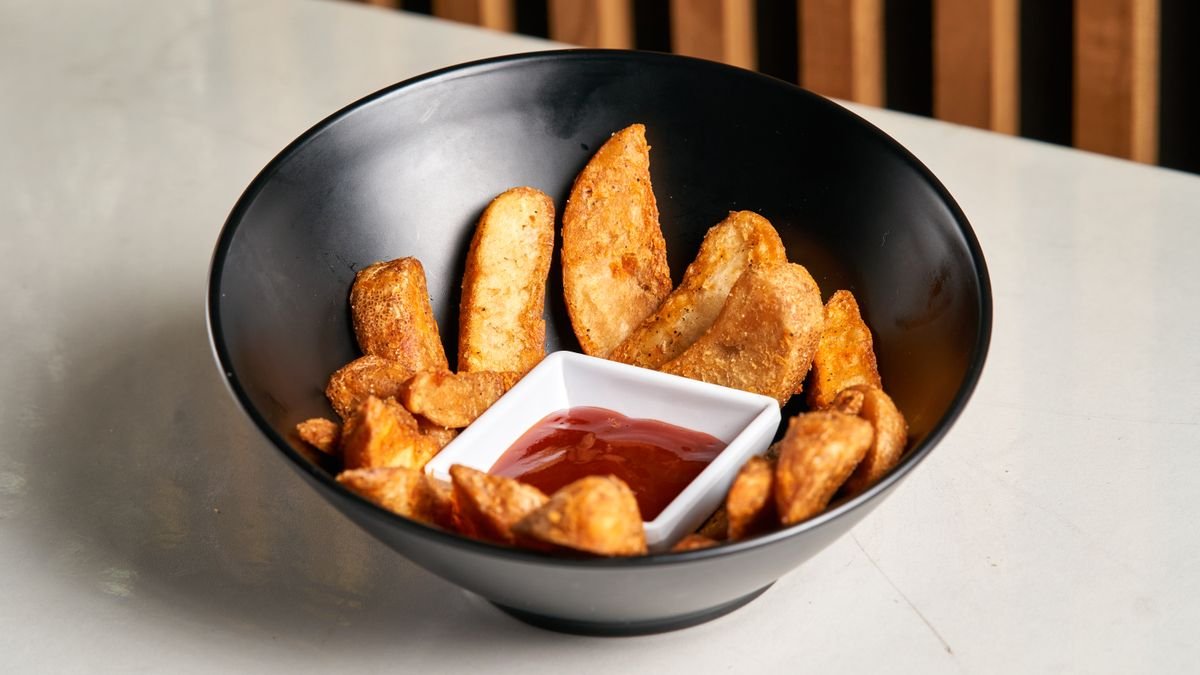
Transfer to a serving platter, taste, and add a pinch of flaky salt if needed. Scatter with parsley and serve immediately with dips — like all air-fried potatoes, they are at their best in the first 10 to 15 minutes.
My Best Tips for the Crispiest Wedges
Do not skip the soak. I know it feels like an extra step when you are hungry, but it genuinely changes the texture. Soaked and dried wedges come out noticeably crisper than wedges cooked straight from cutting.
Dry means dry. After soaking, take an extra minute with the towel. If you think they are dry, pat them once more. Any water left on the surface has to evaporate in the air fryer before browning can start, and that delays crisping.
Give them space. Crowding is the number one reason for disappointing air fryer potatoes. Hot air needs room to move. A single layer with small gaps will always beat a full, stacked basket.
Cut evenly. Wedges of similar thickness finish at the same time. If you have a few very thin slivers mixed in, they will burn while the thick ones are still firm in the middle.
Use just enough oil. You want a light, even coating, not wedges swimming in oil. About 2 tablespoons for 2 pounds of potatoes is the sweet spot.
Season generously and evenly. Potatoes are mild, so they need proper seasoning. Toss twice — once with oil, once with spices — and check that no wedge looks bare.
Serve them hot. Plan the rest of the meal so the wedges can go straight from basket to table. If you are cooking in batches, keep the first batch warm in a low oven at 200°F (95°C) on a wire rack while the second batch cooks.
Common Mistakes to Avoid
Adding wet wedges to the basket and overfilling it are the two biggest mistakes — both cause steaming instead of crisping, and overfilling ends up taking longer, not less time. Skipping the flip is another trap: without turning, the tops brown deeply while the undersides stay pale. Watch wedge size too — very thick wedges from huge potatoes brown before the center softens, so cut large potatoes into more, thinner wedges. Finally, avoid fresh garlic or soft herbs in the initial seasoning at this heat; they scorch and turn bitter. Save fresh herbs for the end.
Substitutions and Easy Variations
Different potatoes: Yukon Golds give a creamier, buttery interior with slightly less crunch. Sweet potatoes also work — cut them thinner, expect a softer texture, and watch the last few minutes since their sugars brown faster. Paprika, a pinch of cinnamon, and a little brown sugar suit them beautifully.
Oil-free option: You can cook these without oil by tossing the dried wedges with 1 to 2 tablespoons of aquafaba or a light spray of vegetable broth to help the seasoning stick, then air frying as directed. They will be a bit less golden and less rich, but still satisfying and crisp on the edges if they are very dry and well spaced.
Parmesan garlic wedges: After cooking, while the wedges are still hot, toss them with 1/4 cup finely grated Parmesan and an extra pinch of garlic powder. The cheese melts slightly onto the hot surface and adds a salty, savory crust.
Cajun wedges: Replace the paprika, onion powder, and cayenne with 2 teaspoons of Cajun seasoning. Serve with ranch or a remoulade-style dip.
Ranch wedges: Use 1 tablespoon of dry ranch seasoning in place of the paprika and onion powder. These are especially popular with kids and are wonderful with ketchup or extra ranch for dipping.
Spicy wedges: Double the cayenne, add 1/2 teaspoon chili powder, and finish with a squeeze of lime juice and chopped cilantro. A cool yogurt or sour cream dip balances the heat beautifully.
Herby Italian wedges: Swap the paprika for 1 teaspoon Italian seasoning and finish with Parmesan and parsley. These pair especially well with chicken, fish, and tomato-based mains.
Loaded wedges: Top hot wedges with shredded cheddar, return to the warm air fryer for 1 minute to melt, then finish with sour cream, green onions, and crumbled bacon or black beans.
What to Serve With Potato Wedges
Wedges are one of the most versatile sides you can make. They are a natural partner for burgers of every kind, hot sandwiches, wraps, and grilled cheese, where their crunch plays nicely against something soft and melty.
For an easy, family-pleasing dinner, I love serving these wedges alongside a simple protein that does not compete for the air fryer. Something like juicy baked chicken breast at 400 is perfect — the chicken bakes in the oven while the wedges crisp in the air fryer, so everything lands on the table hot at the same time, and a green salad or steamed vegetables rounds it all out.
They are also brilliant as a snack on their own with two or three dips — ketchup, a quick garlic aioli, and honey mustard. For a movie night snack spread, if nuggets are on the menu too, it helps to know the exact timing for air fryer frozen chicken nuggets so both finish hot and crisp together. Wedges also sit happily next to grilled fish, steak, barbecue ribs, and breakfast plates, and topped with chili and cheese they become a hearty main with almost no extra effort.
Storage, Freezing, and Reheating
Refrigerator: Let leftover wedges cool completely, then store them in an airtight container in the refrigerator for up to 4 days. Cooling them before sealing the container helps prevent condensation, which softens the crust.
Freezing: Cooked wedges can be frozen, though they will never be quite as crisp as fresh. Spread cooled wedges in a single layer on a parchment-lined baking sheet and freeze until solid, about 1 to 2 hours, then transfer to a freezer bag or container and freeze for up to 2 months. You can also freeze uncooked, cut, soaked, and thoroughly dried wedges the same way — cook them from frozen, adding 4 to 5 extra minutes.
Reheating in the air fryer (best method): Preheat the air fryer to 375°F (190°C) and reheat the wedges in a single layer for 4 to 6 minutes, shaking once, until hot and crisp again. From frozen, allow 8 to 10 minutes. This brings back most of the original crunch.
Reheating in the oven: Spread wedges on a baking sheet and bake at 400°F (200°C) for 8 to 10 minutes. The microwave will make them hot but soft, so use it only if texture does not matter — a quick minute in the air fryer afterward can rescue some crispness if you do.
Nutrition Information
The following figures are rough home-kitchen estimates for one serving (about one quarter of the recipe, roughly 5 to 6 wedges), calculated from standard ingredient values. They are provided as a general guide only and will vary depending on the exact size of your potatoes, the type and amount of oil you use, and any dips or toppings you add.
- Calories: approximately 215 kcal
- Carbohydrates: approximately 37 g
- Protein: approximately 4 g
- Fat: approximately 7 g
- Fiber: approximately 4 g
- Sodium: approximately 300 mg (varies with added salt)
- Potassium: a good source, thanks to the potatoes and their skins
Keeping the skin on adds fiber, and air frying uses far less oil than deep-frying, keeping fat and calories lower than a typical fast-food serving. Dips add extra calories, so count those separately. This is an estimate, not professional dietary advice.
Frequently Asked Questions
Do I have to soak the potatoes first?
No, you can make the wedges without soaking, and they will still taste good, but soaking for 20 to 30 minutes in cold water removes surface starch and gives you a noticeably crisper result. If you are in a hurry, rinse the cut wedges well and dry them extra thoroughly as a shortcut. For the crispiest wedges, though, the soak is worth it.
What are the best potatoes for air fryer wedges?
Russet potatoes are the best all-around choice because their high starch and low moisture produce a fluffy inside and a crisp outside. Yukon Golds are a close second with a creamier, buttery texture. Avoid very waxy potatoes if crunch is your priority, as they tend to stay firm and dense rather than fluffy.
Why are my potato wedges not crispy?
The most common reasons are that the wedges were still wet, the basket was overcrowded, or there was too much or too little oil. Dry the wedges thoroughly after soaking, cook them in a single layer with space between them, and use about 2 tablespoons of oil for 2 pounds of potatoes. Adding the optional cornstarch also helps if your potatoes tend to run moist.
Can I make these wedges ahead of time?
You can cut and soak the wedges several hours ahead and keep them in cold water in the refrigerator, then drain, dry, season, and cook when you are ready. Fully cooked wedges are best fresh, but they reheat well in the air fryer at 375°F for 4 to 6 minutes. Avoid seasoning them far in advance, as salt draws out moisture and can soften the surface.
What temperature and time work best?
400°F (200°C) for 18 to 22 minutes, with a flip halfway through, works well in most air fryers for wedges about 3/4 to 1 inch thick. Thinner wedges may finish in 15 to 17 minutes, and very thick wedges may need up to 25 minutes. Start checking a couple of minutes early, since models vary in power and fan speed.
Can I cook frozen potato wedges in the air fryer the same way?
Store-bought frozen wedges are pre-cooked and usually need no extra oil. Cook them at 400°F (200°C) for about 12 to 15 minutes, shaking the basket halfway, until crisp and heated through. Homemade wedges frozen raw will need 22 to 26 minutes from frozen. In both cases, keep them in a single layer for the best texture.
Do I need to peel the potatoes?
No, and I recommend leaving the skin on. It crisps up nicely, adds flavor, texture, and fiber, and saves you prep time. Just scrub the potatoes well before cutting. If you or your family prefer peeled wedges, they cook exactly the same way — peel them before cutting and soaking.
How do I keep wedges from sticking to the basket?
A light coating of oil on the wedges themselves is usually enough, but you can also lightly spray or brush the basket with oil before adding the potatoes. Avoid aerosol cooking sprays with propellants if your basket has a nonstick coating, as they can damage it over time — a refillable oil sprayer or a pastry brush is a better choice. Flipping halfway also helps release any wedges that have started to stick.
Can I double the recipe?
Yes, but cook it in batches rather than doubling the amount in the basket at once. Season all the wedges together, then air fry half at a time in a single layer. Keep the first batch warm in a 200°F oven on a wire rack while the second batch cooks, so both stay crisp.
Conclusion
Good wedges do not need a deep fryer or a long ingredient list — just dry potatoes, space in the basket, and seasoning you already have. Once you have heard that crunch, these crispy air fryer potato wedges tend to become a regular: next to burgers, with chicken on a busy weeknight, or piled on a platter with good dips. Try the classic version first, then play with the Cajun, ranch, or Parmesan variations. However you serve them, make plenty — they always go faster than you expect.


One Comment